
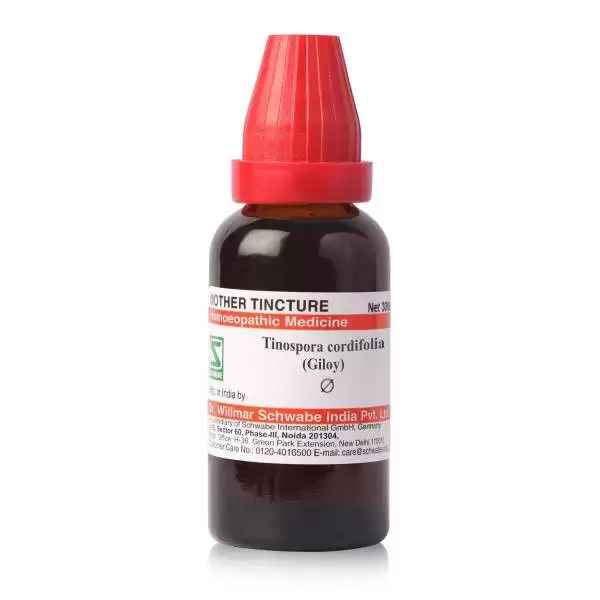




Description
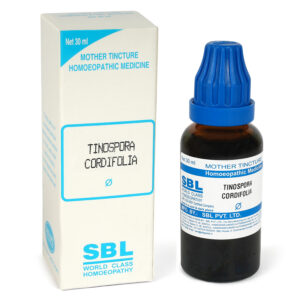
t is an Indian plant, found throughout the warmer parts of India. In Hindi, it is known as ‘Gilo’. It is large glabrous climber with succulent, corky, grooved stem, branches sending down slender pendulous fleshy roots, terete, striate with tubercled, pale, sometimes shining or glaucous bark. Leaves are membranous, 7 to 9 nerved and 5 to 10cm in diameter, cordate, glabrous, acute or acuminate; patiole 2.5 to 7 cm long. Racemes exceeding the leaves, axillary, terminal, bracts subulate.[1] It contains alkaloids including berberine, choline, tembetarine, magnoflorine and tinosporin, diterpenoid lactones, glycosides, steroids, sesquiterpenoid, aliphatic compound, and other bitter substances. A homoeopathic tincture is made from the stem. It is covered by Homoeopathic Pharmacopoeia of India. Clinical Seminal debility; fevers, esp. in intermittent fevers; jaundice; splenic affections; leprosy; leucorrhoea; rheumatism; skin diseases; secondary syphilis, genito-urinary troubles such as gonorrhoea, dysurea, etc.[2] It is also indicated in enlarged spleen and elephantiasis.[3],[4] Fever Acute or chronic malarial fever; temperature rises in the afternoon with chill and shivering, bilious vomiting with thirst and headache. Chronic slow fever with history of gonorrhoea and weakness due to seminal loss. Bad effect of quinine which causes continuation of fever with burning in hands face; jaundice, etc. It is reported to increase platelet count and reduce the body temperature in short duration particularly in fever.[5],[6],[7],[8] Urine Frequent passage of small quantity of urine with burning while urinating; urine mixed with pus.2 Heart Excessive palpitation of heart.2 References
Reviews
There are no reviews yet.