


Description
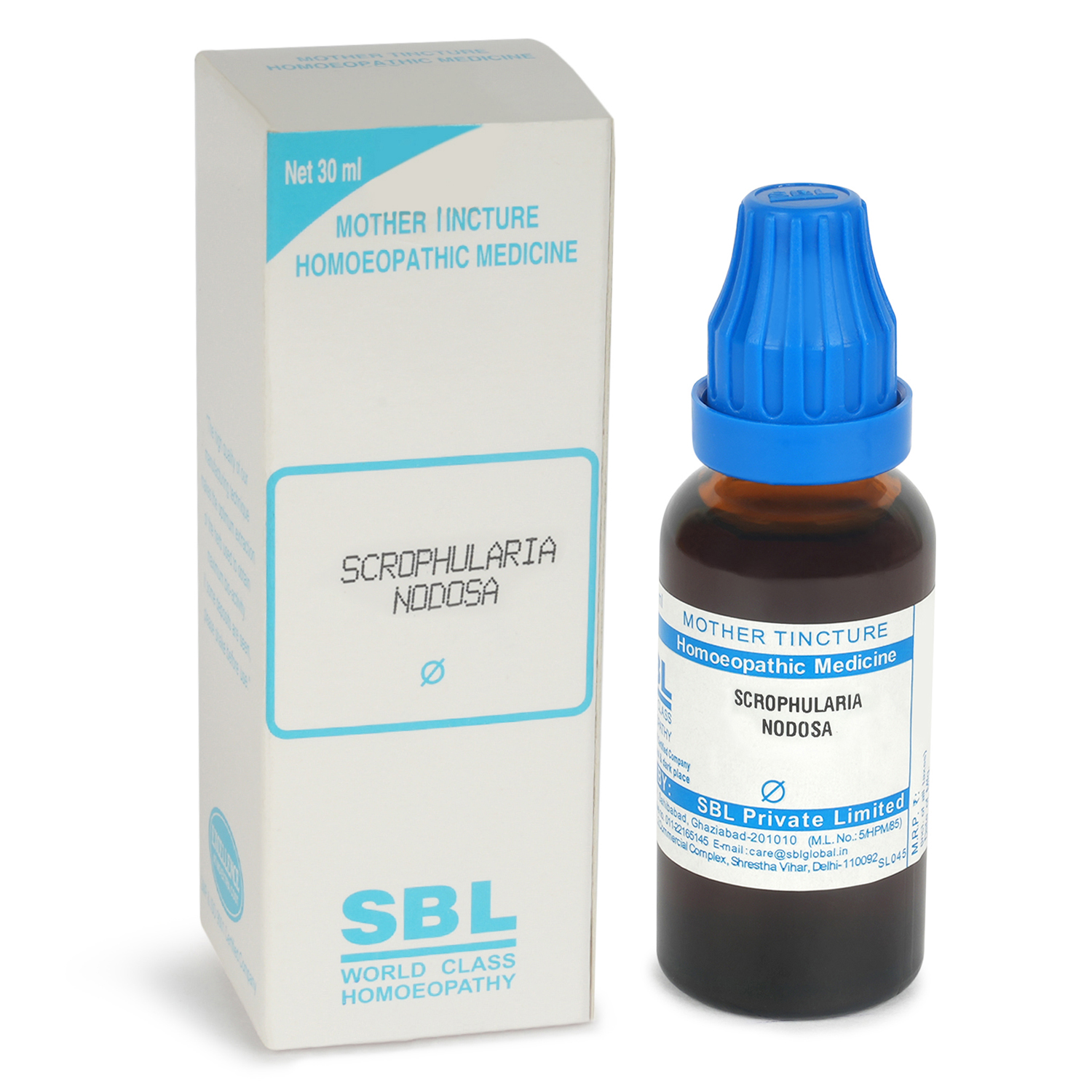
Scrophularia nodosa, a powerful and deeply acting homoeopathic medicine, source of Scrophulariaceæ family, is known for its profound affinity with the glands, lymphatic system, skin, and mucous membranes. Especially useful in scrofulous and glandular conditions, this medicine also exhibits action on the nervous, digestive, respiratory, and musculoskeletal systems. It has been successfully used in breast tumors, eczema, tubercular testis, and various rheumatic and cutaneous complaints. The action is restorative in cases marked by chronic inflammation, headaches, photophobia, and deep glandular involvement.
Common Name
English: Knotted Figwort
SBL’s Scrophularia nodosa can be helpful in the following conditions:
Glandular Swellings and Tumors
- Especially valuable in enlarged lymph nodes and scrofulous swellings.
- Dissipates breast nodosities, epithelioma, and tubercular testis.
- Noted use in Hodgkin’s disease and glandular induration.
Skin Disorders
- Scrophularia nodosa is useful for eczema of the ear and general pruritus (including of the vagina).
- Indicated in pemphigus gangrenosus and vesicular eruptions loaded with spindle-celled epithelium.
- Irritating vesicles on inside of the lips.
- Itching and prickling, especially on back of hands, wrists, and between fingers.
- Hair fall arrested with topical application.
Chronic Headaches and Neuralgias
- Severe throbbing or lancinating headaches in temples, vertex, and occiput.
- Headaches associated with fullness, heat, and puffiness of face and conjunctiva.
- Vertigo and dizziness on standing, with supraorbital pain.
- Darting pain from right facial nerve to the eye.
Digestive Complaints and Abdominal Pain
- Increased appetite followed by nausea and oppression.
- Abdominal colic, twisting, and griping pain, especially in the umbilical and sigmoid region.
- Pain in right hypochondrium, worse on lying right or with deep inspiration.
- Helpful in dyspepsia, appendicitis, and congested liver.
Piles and Rectal Affections
- Protruding and bleeding hemorrhoids with pain.
- Recurrent tenesmus with multiple stools.
Respiratory Discomfort and Chest Tightness
- Oppression of chest, constrictive sensation, and tremulous movement as from weeping.
- Dry, hacking cough without expectoration, worse on deep inspiration.
- Cutting pains in lungs, especially upper left.
- Stitching and pinching in right chest and ribs, sometimes radiating from the liver.
Urinary Troubles
- Burning urination with frequent urging and scanty flow.
- Pinching and tearing pain along course of ureters.
- Enuresis during sleep (bedwetting).
Female Complaints
- Recurring metritis with painful piles.
- Vaginal soreness, burning, and irritation, often resolved with local application.
- Headaches associated with pelvic inflammation improve once local symptoms are relieved.
Fatigue and Weakness
- General weariness, languor, and aversion to movement.
- Marked muscle and joint pains, especially in flexors.
- Cutting joint pains worse by rest and cold air; better in warm room.
- Tendency to abscess formation that does not resolve.
- Painful stiffness of neck and spine; slight opisthotonos.
- Tingling and buzzing in limbs; muscle cramps, especially in palms.
Heart and Circulatory Issues
- Helps in palpitations with anguish in the chest, especially after meals.
- Indescribable heart sensations with audible beating.
- Pulse remains full and regular.
Sleepiness and Afternoon Drowsiness
- Strong daytime sleepiness, especially before and after meals.
- Long afternoon naps with body heaviness and fatigue.
Fever and Sweating
- Chilliness from exposure to cold air or after rising.
- Scrophularia nodosa reduces dry burning sensation of the body followed by profuse sweat, which may lead to stupor.
- Fever phase often marks the resolution of other symptoms.
Reviews
There are no reviews yet.